










At A2, ordinary situations begin to move
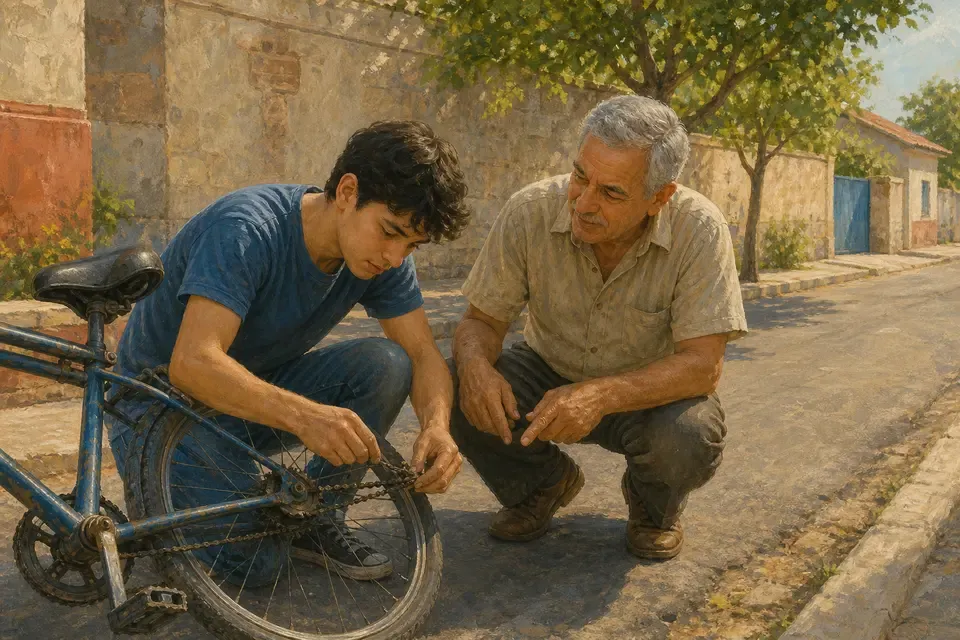
An A1 text often describes what exists or what someone usually does. An A2 story can tell you what changed. A bicycle is borrowed and must be returned; friends organize a picnic but misunderstand the location; a dental appointment interrupts the day. These are still familiar situations, yet they create a before, a problem, and an outcome.
That movement introduces useful time language. You will meet phrases such as ayer, esta mañana, después, entonces, el próximo sábado, and al final. Common forms of the preterite appear alongside the present, and plans may use ir a plus an infinitive. Short exchanges between characters add questions, requests, and polite expressions that resemble the Spanish needed in shops, transport, appointments, and social plans.
You should be able to follow the central event even when one sentence contains a new verb form. Details will not always be immediately transparent. Perhaps you know that a character received something but not exactly why it was unexpected. That partial understanding is productive: the surrounding actions give you evidence, and the next sentence may confirm your guess.
Read for sequence, not for a perfect translation
On your first pass, track the timeline. Notice the opening situation, the moment something changes, and the final result. A quick three-part note with “plan / problem / solution” is often enough. This keeps your attention on the story rather than on translating each sentence into polished English.
During the second pass, circle the connectors mentally or on paper. Words such as pero, porque, por eso, primero, and luego explain how the pieces fit together. Try reading the sentence on both sides of a connector before checking an unfamiliar word. Frequently, the relationship tells you more than a dictionary entry would.
Dialogue deserves a separate reading. Ask what the speaker is doing: requesting help, declining an invitation, explaining a delay, or correcting a misunderstanding. Then borrow one line for your own life. Change ¿Puedes traer la bebida? to ¿Puedes abrir la ventana? or turn a character’s plan into your plan for the weekend.
What progress looks like at this stage
A2 is working when you can reconstruct the order of events and recognize common past forms without stopping to name the grammar rule. You may still reread pronouns, irregular verbs, or sentences with two actions. That is normal. Before moving to B1, aim to summarize the story in four or five connected Spanish sentences using simple links such as primero, después, pero, and por eso. The goal is not speed alone; it is learning to hold a whole event in mind while the language unfolds.